10 Low-Stimulation Habits That Wellness Girlies Swear By
If your nervous system has been running on fumes, this one's for you.
There's a certain type of exhaustion that's hard to explain to people who haven't felt it. You haven't done anything particularly demanding. Your to-do list isn't even that long. But by 3pm you're depleted, overstimulated, and craving nothing more than a dark room and absolute silence.
Sound familiar?
Here's what most wellness advice misses: the problem isn't always that you're doing too much. Sometimes it's that you're being exposed to too much. Too many inputs. Too many notifications. Too many conversations, decisions, opinions, and sounds competing for your attention all at once.
This is what overstimulation actually looks like in real life, and it's far more common than we talk about.
The good news is that the fix isn't a dramatic life overhaul. It's smaller than that. It's a series of quiet, deliberate habits that turn down the volume on your daily experience and give your nervous system the space it needs to actually recover.
These are the ones that genuinely work.

1. The No-Phone Morning
Ask any woman who has made this switch and she will tell you the same thing: it changes everything.
The first ten to thirty minutes of your day set the neurological tone for everything that follows. When you reach for your phone immediately after waking, you flood your brain with stimuli, messages, news, other people's lives, problems that haven't even fully formed yet — before your nervous system has had any chance to regulate itself.
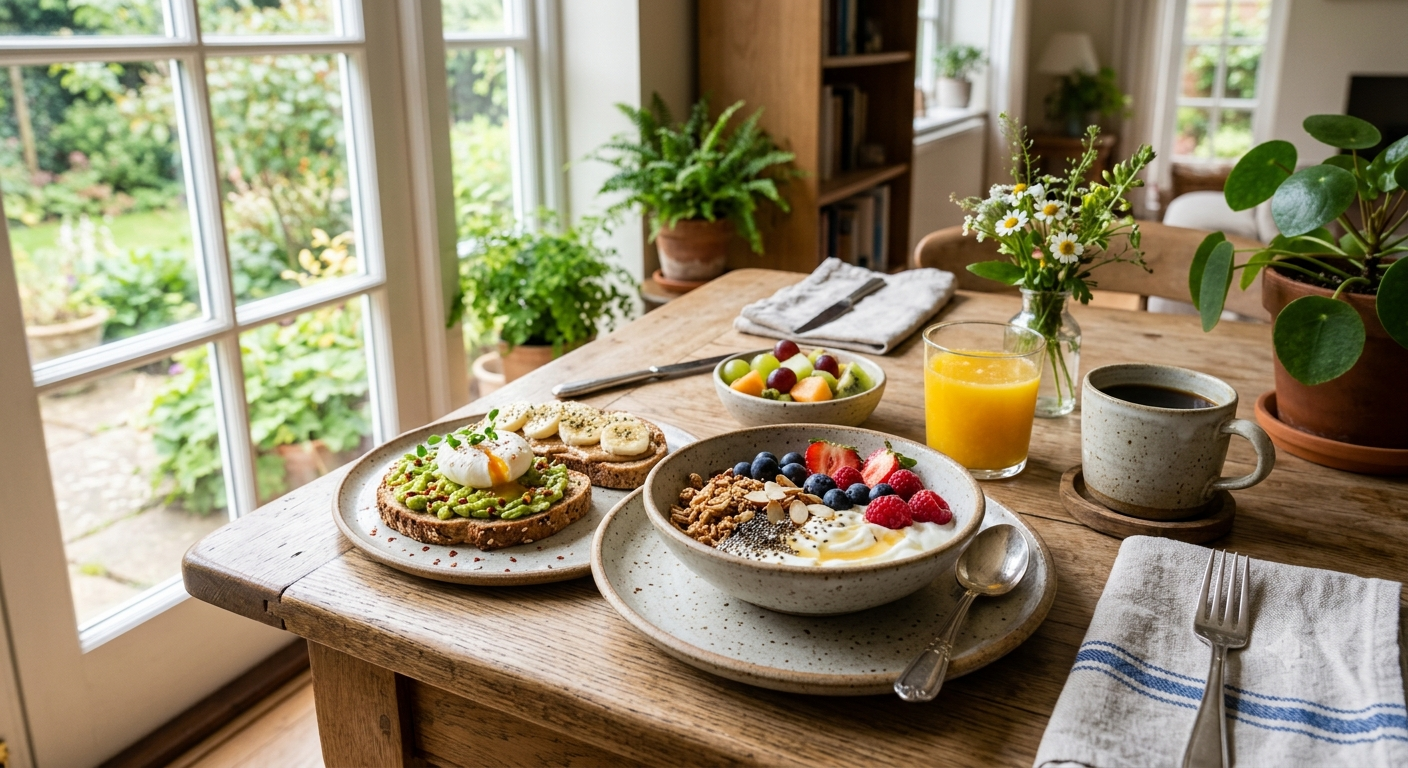
The no-phone morning doesn't have to be long. Even ten minutes makes a measurable difference. You wake up, you exist quietly for a moment, you make something warm to drink, you let the day begin at your pace rather than everyone else's.
What you're doing, neurologically speaking, is giving your brain's prefrontal cortex, the part responsible for calm, reasoned thinking, a chance to come fully online before the demands start. The result is that you move through your morning feeling more grounded, more yourself, and significantly less like you're already behind.
Start with ten minutes. Work up from there if it feels good. The women who swear by this habit often end up making it thirty or sixty minutes without really trying, because the difference in how they feel is impossible to ignore.
2. Sensory Anchoring
This sounds more complicated than it is. Sensory anchoring is simply the practice of regularly bringing your attention to your immediate physical environment through your senses — what you can see, hear, feel, smell, and taste right now, in this moment.
It's grounding in its most literal sense: it pulls your nervous system out of the mental chatter of past and future and drops it into the present, where it's actually safe.
The wellness community has been doing versions of this for years — the 5-4-3-2-1 technique, mindful eating practices, body scan meditations. But in its simplest, most accessible form, sensory anchoring is just a habit of noticing. The warmth of your mug. The weight of a blanket. The sound of rain. The texture of whatever surface your hands are resting on.
In a low-stimulation lifestyle, sensory anchoring serves as a kind of daily recalibration. Any time you notice yourself feeling scattered, reactive, or overwhelmed, you pause and notice five things you can physically sense. It takes thirty seconds. And it works far better than it has any right to.



3. Single-Tasking as a Non-Negotiable
Multitasking is one of the great myths of modern productivity — and one of the most reliable routes to an overstimulated nervous system.
The brain doesn't actually multitask. What it does is rapidly switch between tasks, and every switch carries a cognitive cost. By the end of a day of multitasking, you haven't been efficient — you've been expensive. The mental residue of all that switching accumulates, and it shows up as the kind of tired that sleep doesn't fully fix.
Single-tasking is exactly what it sounds like: doing one thing at a time with your full attention. One tab open. One task on the desk. One conversation at a time, phone face-down. It feels slower at first — partly because we've been conditioned to equate busyness with productivity — but the quality of the work is better and the depletion at the end of the day is significantly less.
The wellness girlies who've built this habit tend to treat it like a quiet protest against the culture of constant distraction. And honestly? There's something a little radical about it.



4. A Proper Transition Ritual Between Work and Rest
Most people have a fuzzy, undefined moment where work is supposed to end and the evening is supposed to begin. In practice, it often looks like closing one laptop tab and opening Instagram. The stimulation doesn't actually stop, it just changes form.
A transition ritual is a deliberate, sensory signal to your nervous system that the working part of the day is genuinely over. It doesn't need to be elaborate. It just needs to be consistent and distinct.
Some people change their clothes. Some step outside for five minutes. Some make a specific drink that they only have at this time of day. Some write a brief list of what they accomplished and what can wait until tomorrow, then close the notebook and put it away. The specific ritual matters less than its consistency — you're essentially training your brain to recognise a cue that means we are done now, we can soften.
Over time, this ritual starts to work almost automatically. Your nervous system learns the pattern, and the shift into rest becomes easier and more complete.
5. Deliberate Silence
We have become so accustomed to a constant soundtrack — music, podcasts, TV in the background, ambient noise from our devices — that actual silence has started to feel uncomfortable. Slightly too much. Like something that needs to be filled.
But silence is not emptiness. It's space. And space is exactly what an overstimulated nervous system needs most.
Low-stimulation living includes periods of genuinely intentional quiet throughout the day. Not meditation (though that's wonderful too). Just silence. No background noise during the commute sometimes. Eating without a screen. Doing something simple — washing up, folding laundry, getting dressed — without filling the space with sound.
The benefits of regular silence are well-documented: lower cortisol, improved focus, better emotional regulation, and the somewhat unexpected bonus of increased creativity, which tends to emerge precisely in the gaps we usually rush to fill.
If silence feels uncomfortable at first, that discomfort is worth sitting with. It usually passes within a few days and what emerges on the other side is a baseline calm that's hard to achieve through any other means.



6. The Digital Sunset
Light from screens suppresses melatonin production, disrupts circadian rhythm, and keeps your brain in a state of alertness at exactly the time it needs to be winding down. This is not new information, and yet most of us are still scrolling right up until we turn out the light.
The digital sunset is a consistent cut-off point, usually sixty to ninety minutes before bed, after which screens go away. Not on the other side of the room. Away.
What tends to happen in that time instead is the things we always say we don't have time for: reading, conversation, a bath, a gentle stretch, some journalling. The evening expands in a way that feels almost implausible if you've been used to disappearing down the phone until you fall asleep.
Sleep quality is almost universally better. But the effect that tends to surprise people most is how different the morning feels. Waking up without that low-grade digital hangover from the night before changes your whole starting point for the day.
7. Spending Time Outdoors Without an Objective
Not a workout. Not a podcast walk. Not content creation in a park. Just being outside without anything to accomplish.
This is quietly one of the most powerful habits in the low-stimulation toolkit, and it's also the one people are most resistant to because it feels unproductive by the metrics most of us have internalised.
But the research is consistent and compelling: time in natural environments reduces cortisol, lowers heart rate, improves mood, and restores what researchers call "directed attention capacity" — essentially, your ability to focus. Even twenty minutes makes a measurable difference. Even a small park. Even a quiet street with some trees.
Beyond the neuroscience, there's something harder to quantify about being somewhere that doesn't need anything from you. No notifications. No demands. No performance required. Just you, existing in a space that was there long before screens and will be there long after.
8. Reducing Decision Fatigue Deliberately
Every decision you make throughout the day — no matter how small — uses mental resources. What to wear, what to eat, what to reply to, which route to take, what to watch, which task to do first. By the time the genuinely important decisions arrive, you're running on fumes.
This is decision fatigue, and it's a major driver of the overstimulated, depleted feeling that so many women describe as just normal life.
Low-stimulation living addresses this directly. Simplify your wardrobe in a way that makes mornings easier. Create a loose meal rotation so you're not improvising food from scratch every day. Designate specific days for specific types of tasks so you're not making meta-decisions about your schedule constantly. Use templates for things you do repeatedly.
None of this is about rigidity. It's about reserving your cognitive resources for the things that actually deserve them — and refusing to spend them on things that don't.
9. A Wind-Down Routine That Actually Winds You Down
There's a difference between stopping and actually resting. Most people are very good at the former and surprisingly bad at the latter.
A genuine wind-down routine is a sequence of low-stimulation activities that progressively calm your nervous system as the evening goes on. The key word is progressive — you're not going from full output to sleep in twenty minutes. You're building a bridge.
What this looks like in practice varies enormously from person to person, but some consistent themes emerge: some form of warmth (a bath, a shower, a hot drink), something gentle for the body (stretching, a slow walk around the house), something analogue for the mind (reading a physical book, light journalling), and the absence of screens and significant decisions in the final hour.
The women who have built this habit describe it less like a routine and more like a gift they give themselves each evening. Once you've experienced the difference in how you wake up when you've actually wound down properly the night before, the habit tends to take care of itself.
10. Choosing Boredom Over Stimulation (Sometimes)
This is the hardest one. And probably the most important.
We have collectively lost our tolerance for boredom. Any gap in stimulation — a queue, a commute, thirty seconds waiting for the kettle — is immediately filled with a screen. The idea of sitting somewhere with nothing to look at, no headphones in, nothing to do, feels almost transgressive.
But boredom is not wasted time. Neuroscience increasingly shows that the "default mode network" — the brain state activated when you're not focused on a specific task — is where some of your most important cognitive work happens. Emotional processing, creative thinking, memory consolidation, self-reflection. All of it happens in the background when you give your brain a moment of genuine quiet.
Beyond the brain science: boredom is where you find out who you actually are without the constant input. What you think about when you're not being told what to think about. What you notice when you're not being shown what to notice. What you feel when you're not being distracted from feeling it.
Choosing boredom over stimulation, occasionally and deliberately, is one of the quietest and most radical things you can do for your nervous system in 2026. It's also one of the most telling — because how uncomfortable it feels in the first few minutes tells you exactly how much your nervous system needed it.
A low-stimulation lifestyle isn't about doing less. It's about being more deliberate about what you let in. Your nervous system is not built for constant input — and the way you feel right now is proof of that.
Pick one habit from this list. Not all ten. Just one. Let it settle for a week before you add another. Slow is the whole point.